
The Hidden Cost of
Bad Candidate Submissions
Every unvalidated candidate you submit costs you more than you think — and most of it never shows up on an invoice.
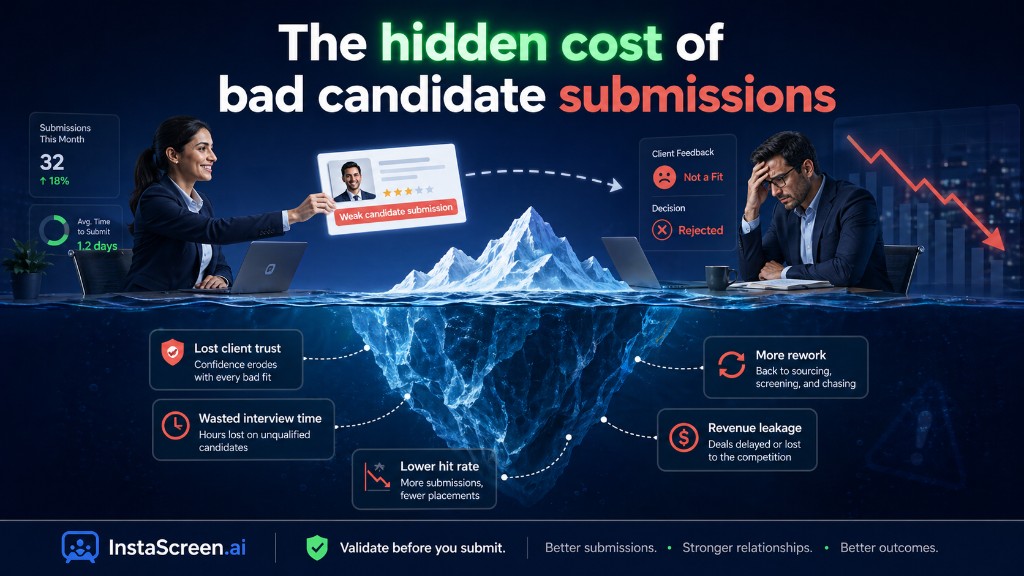
The problem no one talks about openly
You found a great-looking resume. Strong keywords. Decent experience. You submitted the candidate to your client, feeling confident.
Three days later: silence. Or worse — a one-line email: “Not moving forward with this one.”
You move on. Pick another candidate. Submit again. The cycle repeats.
What you may not see is what’s quietly happening in the background — your client is keeping score.
Why it keeps happening
The root cause isn’t laziness. It’s a process problem.
Most recruiters screen candidates the same way they always have: review the resume, have a quick call, ask a few general questions, and submit. It’s fast. It feels like screening. But it’s not validation.
There’s a massive difference between a candidate who sounds skilled on a call and one who can actually demonstrate those skills under pressure. Resumes are polished. Calls are easy to prepare for. Neither reveals the truth about what someone can actually do.
A real-world scenario
Ramesh, a staffing recruiter at a mid-sized IT firm, submitted five candidates for a senior React developer role over six weeks. Three had strong resumes — 5+ years of experience, relevant projects listed, confident on the phone.
All three failed at the client’s technical round. The client never told Ramesh why. They just quietly stopped sharing new requirements with his agency.
Ramesh lost the account not because of one bad candidate — but because the pattern told the client: this vendor doesn’t validate before sending.
The real costs (most of which are invisible)
Here’s what a bad submission actually costs you — broken down beyond the obvious:
The solution: validate before you submit
The best recruiters treat submission as the last step — not the first one after a resume review.
Before any candidate goes to a client, they verify three things:
What this looks like in numbers
Recruiters who validate skills before submission typically see their submission-to-interview ratio improve from 1-in-5 to 1-in-2 within 60 days.
That compounding effect means more interviews, more placements, more trust — and more roles coming your way.